
INTEGRATED MANAGEMENT OF LAND BASED ACTIVITIES
IN THE SÃO FRANCISCO RIVER BASIN PROJECT
GEF/ANA/OAS/UNEP
Activity 3.1 Evaluation of the Implementation of Instruments of the Water
Resources National Policy for the Pilot Basin of the Maranhão River
Executive Summary of the Final Report
FEASIBILITY STUDY OF THE CREATION OF A WATER
AGENCY IN THE MARANHÃO RIVER SUB-BASIN
Belo Horizonte-MG
INTEGRATED MANAGEMENT OF LAND BASED ACTIVITIES
IN THE SÃO FRANCISCO RIVER BASIN PROJECT
GEF/ANA/OAS/UNEP
Activity 3.1 Evaluation of the Implementation of Instruments of the Water
Resources National Policy for the Pilot Basin of the Maranhão River
Executive Summary of the Final Report
FEASIBILITY STUDY OF THE CREATION OF A WATER
AGENCY IN THE MARANHÃO RIVER SUB-BASIN
Coordinator
Elisa de Castro Bruzzi Boechat
IGAM Instituto Mineiro de Gestão das Águas
Consultant
Carlos Eduardo Orsini Nunes de Lima
Contract CPR/OEA no PO 35011
February 2003
FEASIBILITY STUDY OF THE CREATION OF A WATER AGENCY
IN THE MARANHÃO RIVER SUB-BASIN
EXECUTIVE SUMMARY
INTRODUCTION
Activity 3.1, "Evaluation of Water Resources National Policy Instruments Implementation
for the Maranhão River Pilot Basin", is part of the Component of Organizational Structure
Development, of the GEF São Francisco Project and is aimed at improving oinstitutional
capacities and personnel involved in the enforcement of new laws, regulations and procedures, to
assure the continuity of the water resources management practices in the Basin.
The main objective of Activity 3.1 is to evaluate the implementation of Laws 9,433/97 (which
defines the new Water Resources National Policy) and 13,199/99 (Legislation of the State of
Minas Gerais)in the Pilot Basin of the Maranhão River. With this purpose, it carries out a
simulation of the operation of a Water Agency, to emphasize the difficulties and paths to follow,
in the implementation of a participative and integrated institutional management system, as
proposed by the mentioned laws, viewing the preservation of the water resources and sustainable
development.
The Maranhão River, belonging to the
Paraopeba River Basin, one of the main
tributaries of the São Francisco River, in it
super course, is located in the central part
of the State of Minas Gerais (see Figure
1). Its drainage basin, with 714.6 km²,
covers the Municipalities of Conselheiro
Lafaiete, Congonhas do Campo and Ouro
Branco, in addition to part of Itaverava
and Ouro Preto.
The Region of interest is strongly
characterized by relevant mining and
siderurgic activities, as well as by an
increasing urban expansion in the past
decade, due both to its great economic
expression in the State and to being in the
route connecting two important economic
Figure 1. Sub-Basin's location.
poles (Rio de Janeiro and Belo
Horizonte)
i
The studies, developed in two stages, were initiated in January of 2000. The first stage consisted
of data surveys, elaboration of an environmental diagnosis, advertisement of the Project and
social mobilization. The following stage made a review of the legal juridical institutional context
and prepared a preliminary scenario for the structure a pilot Water Agency, through a financial
and economic simulation with emphasis on the charge for the use of the water.
1.
CHARACTERIZATION AND ENVIRONMENTAL SITUATION OF THE
MARANHÃO RIVER BASIN
The Maranhão Basin has a population of approximately 175,000 inhabitants (IBGE Census,
2000), with 95% concentrated in the urban seats of the three most important Municipalities. The
Regions's history of settlement and economic structuration is marked by the mining activities
started in the 16th Century, in Minas Gerais. It is located in a mountainous region, with highly
irregular topography and a mesothermic climate, with moderate temperatures and high
pluviometry, concentrated in the Summer months. Mean annual precipitation is around 1,300
mm.
As shown in Figure 2, the Maranhão River is formed by the confluence of two water courses, just
upstream from the City of Conselheiro Lafaiete. Those are the Ventura Luiz and the Bananeiras
Creeks, both starting in Southern part of the State and running in the North-South direction.
Figure 2. Political division of the Maranhão River Basin.
ii
The mean long duration flow in the Maranhão River, downstream from the City of Congonhas, almost
in its merging with the Paraopeba River, is 10 m3/s, what results in a mean specific discharge of 15
l/s/km2 (mean water availability). The maximum values for mean specific discharges are in the order of
20 l/s/km2, in Ouro Branco Mountains, and the minimum values are around 10 l/s/km2, near
Conselheiro Lafaiete. In terms of monthly averages, the maximum river flows reach the 58 m3/s, while
the minimum are around 2.5 m3/s. In absolute values, the maximum was 270 m3/s and the minimum 2.0
m3/s. The discharge corresponding to a 95% permanence is 2.63 m3/s.
Geologically, the basin outstands for containing part of the Iron Quadrilateral of Minas Gerais, in
its North-Northeastern portion, where it makes boundaries with the Rio Doce and Rio das Velhas
Basins. Its lithology is constituted by rocks of the Minas Supergroup, whose stratigraphy includes
formations of the Itabira and Piracicaba Groups, that present the most important iron ore reserves
and mining activities.
As shown in Figure 3, the campestrian formations, represented by rupestrian and cerrado fields,
cover the litholic soils at the mountain crests, composing the typical landscape of the Region,
covering 17% of the Basin's area.
Figure 3. Soil use and occupancy.
iii
The native forest formations, characteristic of the transition zone between the cerrado's
phytogeographic domains and the Atlantic Forest, where the Basin is located, corresponding to
20% of its area, are highly fragmented. Those lay predominantly in hillsides with steep declivities
and bottom of valleys (areas with a low agricultural and livestock raising utilization). Riparian
woods, whenever found, are also greatly fragmented.
Almost 50% of the Basin's area are occupied by pasture, being insignificant the use for
agriculture (less than 0.5% of the area). Except for potatoes, planted in the Eastern part of the
Basin, agriculture and livestock raising have an exclusively subsistence character, given the soil
and topographic conditions, predominantly cambrian. The indiscriminated use of agrochemicals
and fertilizers in the planted areas has been a matter of concern for the downstream population,
due to the risks of water contamination by toxic elements. However, the problem has not yet been
properly investigated.
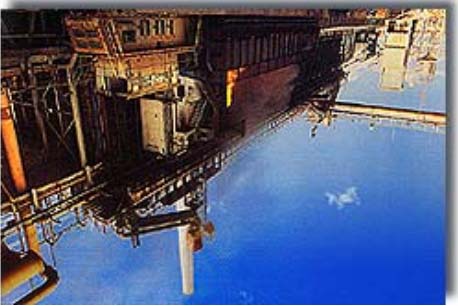
Picture 1. Siderurgic industry
In the Maranhão River Basin, a few large industries stand out, in the area of siderurgy and iron
alloys, including the production of iron-silica and iron-manganese. The most important of them is
AÇOMINAS, with an annual steel production of 2.5 million tons.
Life quality and income indicators in the Basin's Municipalities ate considered good, in
comparison with the State and National averages. As a result of that, society is well organized,
with a good number of representative entities of the diverse sectors. Infrastructure, however, still
is not satisfactory, mostly in regard to the basic sanitation segment.
iv
The main factors impacting water quality in the Basin are related to local mining and industrial
activities, to the urban sanitary conditions and to the dense road network in the Region,
connecting important regional economic poles. The map in Figure 4 presents the physical
distribution of these factors.
Figure 4. Environmental impacts map.
As iron and manganese mining predominate, interferences resulting from these activities on the
water resources are basicaly related to earth movement for opening access roads, scraping areas
for excavating the pits, building piles of displaced material, processing the iron-ore and disposal
of the waste.
This type of mining, particularly in the outdoors, intensifies the local topographical differences and
declivities, interfering with the mobility of the terrain, making them vulnerable to impacts of runoff. It
magnifies the transport of solid material to the water courses, altering the streambeds and the hydro-dynamic
equilibrium, specially in the rainy season. This usually occurs when no impact mitigating measures are taken
in the mining áreas, in the abandoned or idle mining camps, or in developments without licensing by the
environmental agencies.
v
The concentration of the population in urban centers brings direct impacts onto the water
resources, either related to urban supply, disposal of domestic or industrial effluents, or to the
inadequate garbage disposal, which usually reaches the water courses. This is made evident by
the high phosphate, fecal coliforms, nitrates and amoniacal nitrogen contents found in the waters
of the Maranhão River, from the Bananeiras Creek, downstream from Conselheiro Lafaiete, to its
mouth on the Paraopeba River.
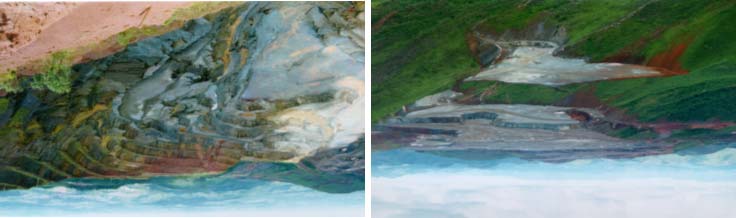
Picture 2. Iron mining: Views of the main excavation (left) and disposal reservoirs (right).
In short, the main course of the Maranhão River is highly degraded, in view of the many
anthropic activities developed in its Basin. Water quality is bad. According to assessment by the
Environmental Foundation of the States of Minas Gerais (FEAM), in 1998, the mean Water
Quality Index was 43.76 (rated as bad), being the second worst in the entire Paraopeba Basin.
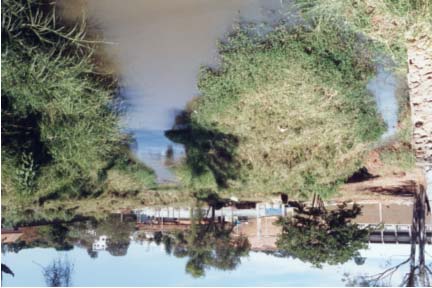
Picture 3. Bananeiras Creek, in the surroundings of Conselheiro Lafaiete
vi
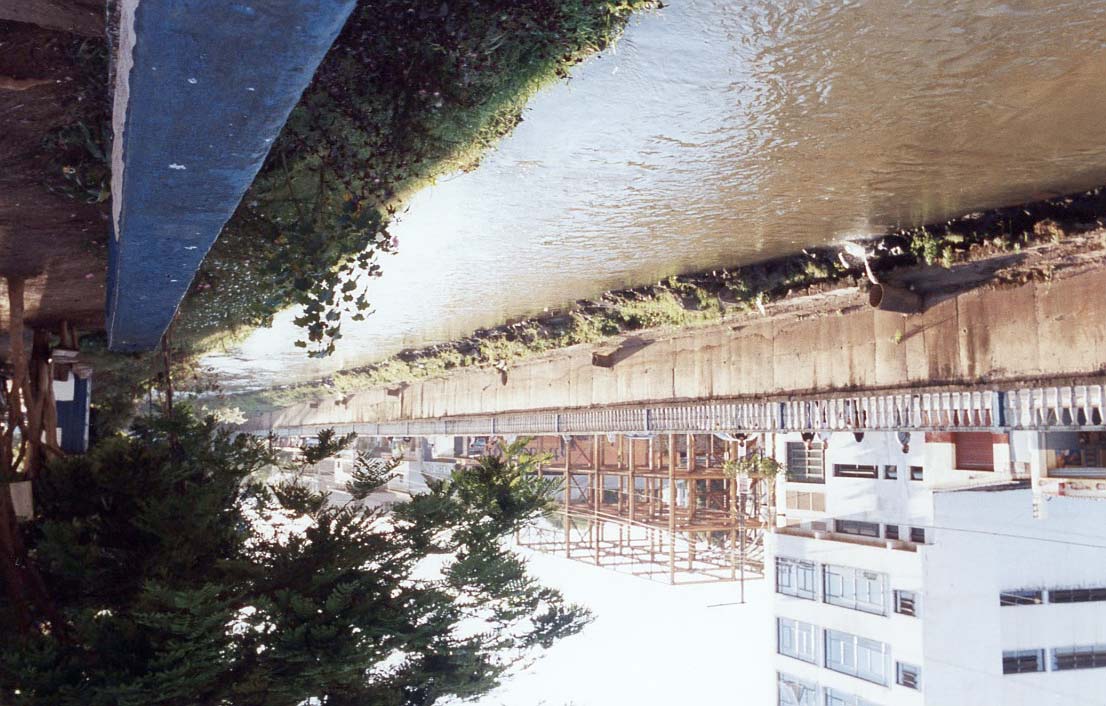
Picture 4. Bananeiras Creek in the City of Congonhas
It is worth mentioning the participation of COPASA (Sanitation Company in the State of Minas
Gerais), that recently was made responsible for the public water supply and sanitary sewers in
Congonhas, thus being responsible for all Municipalities in the Maranhão River Basin. Its
investment plan, under implementation, regarding sewer treatment, will assure the treatment, in
the medium range, of 100% of the domestic sewers in those three Municipalities.
The water courses in the Paraopeba Basin were classified by he FEAM, according to their
predominant uses, through the Normative Deliberations COPAM 14/95 and 10/86, as presented
in Figure 5. This legislation establishes norms and standards for water quality and for disposal
of effluents in water courses, aiming at setting quality levels to be met and maintained along
the time.
2. LEGAL AND INSTITUTIONAL CONTEXT
The National Water Resources Policy, established by Law 9,433/97, represented a new
institutional mark in the Country, incorporating globally accepted and practiced water
management norms and standards Activity 3.1 emphasized the existing legal and juridical
instruments constituting the institutional base basin management matters.
Law 9,433/97 establishes na institutional arrangement for the National Water Resources
Management System composed by institutions of the public sector, Basin Committees and Water
Agencies. The basin Committees also have in their composition representatives of the public
sector, of water users and of the organized civil society. This arrangement introduces a new
concept of decentralized and participative water resources management in the Country.
vii
Figure 5. Water Bodies Classification Map for the Maranhão River Basin.
In Minas Gerais, considering the basic legal principles, the State Government decided to improve the
existing institutional model, creating , in January of 1997, a new model of autarchy, with a more modern
structure, the Water Management Institute of Minas Gerais (IGAM), integrated to the National Water
Rsources Management System.
The Paraopeba Basin, where the Maranhão River Basin is inserted, had it Committee formed in
May of 1999 and inaugurated in August of 2000, as this Activity was under way. Being a
State\river, it is ruled by Law 13,1999/99, which institutes the StateWater Resources Policy and
the respective Management System. In this case, the Institutional Agents are\as follows:
· At Federal Level: National Water Resources Council, ANA and the São Francisco
River Basin Committee.
· At State Level:
State Water Resources Council and IGAM
· At Basin Level:
Paraopeba River Basin Committee.
Regarding political movements in favor of water resources in Minas Gerais, besides the already
mentioned awareness buiding, involving politicians, it is worth highlighting the manifestations
carried out by the State House of Representatives, implementing the "Waters of Minas Program".
viii
Regarding institutional issues, IGAM, as the institution repsonsible for the water resources
management in the State, under PROÁGUA's sponsorship, made progresses in the development
of a new organization model, not yet implemented, in order to better adjust to the new concepts in
participative management. With respect to the management instruments included in Law
9,433/97, some initiatives were taken, even before sanction, in order to advance in the process of
their implementation.
Water Resources Director Plans for State Basins were contracted with funds from the Secretary
of Water Resources (SRH/MMA). Among them the Plan for the Basins of Tributaries to the São
Francisco in the State of minas Gerais. However, due to problems related to release of funds,
from the State Counterparts, Works were halted.
Normative Deliberations for Classification of Water Bodies were approved by the State
Environmental Policy (COPAM), after 1991. These classifications were created by FEAM, under
the light of the COPAM's Normative Deliberation nr. 10, which establishes norms and standards
for water quality and disposal of effluents in water courses. The Deliberation nr. 14, of
12/28/1995, was referent to the Paraopeba River.
IGAM has been practicing Concession of Water Rights since its creation, in 1997, base don the
procedures established in the Administrative Decree 010/98 and subsequent acts. Among other
things, these procedures determine that until reference flows are estimated for each watershed,
the Q7,10 (minimum flow with a 7-day duration in a 10-year period) will be adopted as the
maximum value for water rights concession in any of the considered sections. In this manner, a
minimum residual flow of 70% of the Q7,10 will be assured.
As to the State Water Resources Information System, IGAM's Re-Structuration Project will
guarantee its implementation through the Directory of Instrumentation and Control. It is
anticipated na integration with the other departments of the Environment State Secretary, forming
a single information system.
At last, with respect to the charges for the use of the water, no instruments have been
implemented yet in the Basins in the State of Minas Gerais. There are studies and simulations
only for the Rio das Velhas and the Paraibuna Basins. In addition to that, there are discussions,
still incipient, related to the Basin Committees already created.
3. ADVERTISEMENT AND SOCIAL PARTICIPATION PROGRAM
One of the foundations of the Water Resources Policy is the participation and thw working of all
the involved in the water resources issues. The groupal efforts provides the strenght for
implementation of the new management instruments. The legitimacy of the actors who will work
in the sector is possible only with the participation of all the involved, in the broadest possible
way. The identification of the main actors and water users, their demand, conflicts and
potentialities is of great importance to this work.
ix
3.1
MAIN SOCIAL ACTORS
By Social Actors, it is meant not only the formal representatives of the Water Resources
management System, but also the informal representatives who, even not being members of the
Basin Committee, are active in the participative management process, such as class associations,
NGO`s and local leaderships.
The local Institutional Agents are represented by the Municipal Governments and their
respective CODEMA`s of the five Municipalities in the Basin, with greater participation of
Conselheiro Lafaiete, Ouro Branco and Congonhas.
The Users' Sector is represented by water supply and basic sanitation services companies and by local
mining and siderurgy enterprises.
Among the Basin's Social Organizations, stand out the CIBAPAR (Inter-Municipal Consortium
of the Paraopeba River Basin),a collegiate forum with juridical personality and pioneer
deliberative power in Minas Gerais. It was created in 1994 and has been acting, since then, as a
precursor of the Basin Commitee, serving as space for organization and mobilization of the
diverse segments of water users.
3.2 EVENTS
In the search for its objectives, Activity 3.1 proposed and started a promotion and social
mobilization program. A series of events was carried out, aiming to reach as much public as
possible. From closed meetings for formal representatives of the Basin and of public
organizations to courses and public surveys open to all water users and to the community.
During the work, two courses were offered, to explain the new Water Resources policy, mainly
with respect to the management instruments, such as the classification of water bodies, the
concession and charge of the use of the water: 70 persons participated in these courses.
The Public Enquiries were the crowning events of the social mobilization. They tried to identify
the main concerns, demands and conflicts related to water uses and users, as well as potentialities
and local leaderships. They were preceded by meetings, involving 82 people, for the capacitation
of monitors and environmental agents. The six Enquiries were carried ou in two rounds, in
Congonhas, Ouro Branco and Conselheiro Lafaiete, from September through December of 2001,
with a participating public of approximately 250 people.
3.3 PUBLIC ENQUIRIES ASSESSMENT
The Prefectures showed little knowledge about the issue, no capacity for social mobilization and
lack of articulation for implementing integrated actions viewing the restoration of water resources
x
quality. Nevertheless, they were willing to get informed and to play an hegemonic rule in the
future management process.
The civil organizations showed great interest in participating in the events. However, they have
limitations in presenting themselves as representatives of the Basin, as they have difficulties in
converging their specific objectives, which tuens them unarticulated and heterogeneous.
The water users sector, represented mainly by mining, siderurgy supply/sanitation enterprises,
has shown itself open to discussions and committed to the environmental preservation objectives.
Historically, they have been assiduous participants in the forums, even patronizing them, aiming
also at building a better institutional image for themselves. Usually, they keep track of the public
sectors' policies and trends, in order to integrate them into their economic strategies, showing
skills to integrate with higher instances of the Government.
In a broad way, representatives of the agricultural and livestock raising segment showed concern
with the criteria for water charges, being worried with its enforcement.
The participants in the Public Enquiries emphasized that, in spite of the sfforts made in the Basin,
the degradation process is still present, thus requiring the implementation of more effective
actions by all sectors. This is critical, specially in isues related to sanitation, spring preservation
and greater efficiency of the environmental monitoring agencies, particualrly with respect to
disposal of solid residuals.
The Enquiries, carried out during the development of this work, revealed the need of the
communites with respect to a greater knowledge of the Basin's problems. There is a willingness
to learn, specially matters related to the "economic value of the water".
3.4 SOCIAL MOBILIZATION AND ENVIRONMENTAL EDUCATION PROGRAM
Based on the expectations and desires of the Community, identified by the Public Enquiries, a
Social mobilization and Environmental Education Program was proposed for the Maranhão River
Basin, aiming at the participation of all social sectors in the Basin Committee's consolidation
process and in the particiaptive management of the water resources.
In the three main cities, groups of the civil society already participate in the local agenda related
to environmental issues and to the new management model, as well as in the actions promoted by
the Activity. This constitutes a minimum base for planning actions for future social
mobilizations. It is suggested that all agents take part in the search for articulation, institutional
integration, social communication, environmental education and formation of multipliers.
Among the proposed actions, there are:
· Research to produce information on water resources, to build the Basin Committee's
Information System;
xi
· Setting up a center for making the information available to the communities;
· Promoting social and cultural multidisciplinary expeditions to the water courses;
· Coordinating courses for the formation of "Social-Environmental Agents";
· Promoting events related to water resources management, organized by the CBH-
Paraopeba, with support from IGAM and from the Prefectures. Itinerant expositions
and environmental perception circuits to strategic points in the Basin, where citizens
may verify the problems in loco;
· Producing educational material for distribution in schools and environmental related
local institutions;
· Encouraging civil society's voluntary and autonomous initiatives related to
environmental education, specially those originated by cultural movements, such as
theater groups, cultural groups or class associations.
4.
STRUCTURING A PRELIMINARY OPERATIONAL MANAGEMENT SYSTEM
Experiences in the field of water resources are diversified. Many countries have been through
changes in the legal and institutional apparatus, in response to environmental restrictions,
promoting the adoption of economic instruments. Some characteristics are common to the States
and might be considered as references for the management of the water resources. Among them,
the planning and the flux of information, cadastration processes, concession of rights and charges
for the water use and definition of managers and users, as c-responsible for the management.
Taking advantage of the base provided by Federal Law 9433/97, the defense mechanisms and the
concept of paying-polluter are vastly advertised. In addition to the concept of paying-user, the
obligation to pay for the use or for the degradation of the water resources is established.
4.1. APPLICATION OF THE DIRECTOR PLAN FOR THE WATER RESOURCES OF
THE TRIBUTARY BASINS OF THE SÃO FRANCISCO RIVER TO THE
MARANHÃO RIVER BASIN
Among the activities included in the Director Plan for the Water Resources of the Tributary
Basins of the São Francisco River in Minas Gerais (yet to be concluded), there is a sketch of a
Director Plan for the reclamation and water resources management in the Maranhão River Basin,
in a macro scale, containing directions for the following actions:
· Treatment of sewers and urban effluents (domestic and industrial);
· garbage collecting, disposing and recycling;
xii
· controlling the production of residuals from agricultural and livestock raising activities;
· environmental education;
· preservation of springs;
· proper soil management;
· controlling water usage through concession of rights of use
· reclamation of degraded areas; and
· support to the operation of the River basin Committees.
All those actions are included in the Plan of Actions proposed in this study, taking into
consideratio the already existing projects, those to be implemented soon, by local institutions, and
the use of funds obtained with the charges for the use of the water.
4.2 CONSIDERATIONS ABOUT THE IMPLEMENTATION OF WATER AGENCIES
Water resources management problems might be treated with regulations or market instruments. To
achieve that it is necessary to implement effective instruments that work closely with the diverse
involved interests. They might have a corrective, preventive, proactive or economic character.
Corrective instruments include fiscalization, fines and penalties. The preventive ones include
evaluation, licencing, concession of water rights and monitoring. Among the proactive there are the
planning, the zoning, the classification, the regulation, research, education and communication. Finally,
the economic instruments include the rates of use, economic incentives, charge for the the use,
compensations, etc.
The National Water Resources Policy will only be in effect when the Basin Committees are fully
operating, through their executive offices, the Water Agencies. By their turn, the creation of a
Water Agency depends on its financial feasibility, to be guaranteed by the charge for the water
use in its area of influence.
In view of this, the management actions implemented by the Basin Committees should take into
account the following:
· Establishment and execution of work routines with the users, to promote their
enrollment;
· Constitution of a technical assistance to support the formulation of criteria, norms and
technical standards for the definition of tariffs and implementation of the charging.
xiii
Water Resources Use Charges Principle
The act of charging converts the water into financial assets. Transforming financial resources into
water consists in re-distributing the charged amount. Both transformations must be considered in
a transparent participative and negotiated process, by the Basin Committee. Charging must
necessarily impose behavioral changes in the society, through the valorization of the natural
resource represented by the water. Charging is a mean, not the product. When charging results
from the need for practical solutions for existing problems, there is a greater probability of
success.
An adequate charging policy must be based on the understanding of the actual water resources'
situation, using as references the basin's diagnosis and the identified conflicts of use, as well as
the need for actions to mitigate existing problems, while preserving water availability and quality.
According to the agenda 21, "in planning, all investments and operacional costs must be taken into
account, as well as the opportunity costs reflecting the most valuable alternative use of the water.
Charging must not be, necessarily, a burden to all beneficiaries. The charging mechanisms, however,
must reflect, as much as possible, the actual cost of the water, when used as an economic good, and the
capacity of the communities to pay for it".
Administrative Aspects of the Water Charges
To allow charging for the water, it is required a managerial support, covering administrative and
operational aspects. In a Water Agency's context, basic management instruments and tools must be
available to allow for this cycle to be fulfilled. Water charging's operational cycle is formed by the
following successive steps:
· Divulgation, Persuasion and Negotiation understanding the divulgation of the charging
system, of the Basin's situation, of the investment plan and of the goals and objective sto
be achieved;
· Cadastration of users;
· Metering and charging based on established criteria, norms and standards;
· Collection - Arrecadação formalizing the bill of charges, delivery to users and
receiving, by the official cashier.
4.3 WATER RESOURCES USES AND USERS IN THE BASIN
The establishment of water charges' criteria and values requires a social and economic analysis
of the universe of water users, their demands and of the potential impacts on the water resources,
for each one of the representative economic sectors in the basin.
xiv
Based on previous studies, the main users were associated with their respective uses, either in the
water intake (classified as paying users) or in the disposal of pollutants (classified as paying
polluters). In this manner, the most significant users, whose used amounts exceeded those granted
by IGAM, were identified. To make the study as efficient as possible, the following classes of
water users were adopted, both for water intake and disposal of effluents:
· Domestic: including users located in urban areas (households, commercial, public and
industrial classes);
· Industrial: constituted by the large isolated industries;
· Mining: large isolated developments;
· Agriculture and livestock raising: only registered users.
Chart 1 and Figures 6 and 7 present in absolute and realtive values, respectively, a summary of the total
diverted and return flows in the Basin`s drainage network, by users` sector.
Chart 1. Water uses in the Maranhão River Basin, by economic sector
Diversion Totak
Efluents
User sector
m3/s
m3/s
Domestic 0.63
0.34
Industrial 2.75
0.73
Mineral 1.05
0.46
Agriculture 0.40
0.00
Livestock raising
0.05
0.00
Total 4.88
1.53
Figure 8 presents a broad view of the main users, with respect to water availability in the water
bodies in the Maranhão River Basin, in a unifilar diagram. It also allows the evaluation of the
importance of maintaining the quantity and quality of the existing water bodies, as well as in their
springs, as a way to assure the proper social and economic sustainability of the Region.
xv
Figure 8 Hydraulic balance diagrams
xvi
4.4 SIMULATION OF A PRELIMINARY CHARGING SYSTEM
Water Use Charges
Determining water charges must begin with the establishment of some conditions to be fulfilled
by the values associated to them. The first of those conditions is related to the target amount to be
collected: The amount must be compatible with the proposed forms of financing for the
investment plan and operation of the management system. The second condition refers to the
paying capacity of the diverse users` segments.
For the preliminary simulations presented ahead, an investment framework was built taking into
account mainly the development opportunities already in discussion in the Region, especially
those considering the treatment of sanitary sewers as mitigating measures for the pollution of
water bodies.
For establishing the tariffs, values used for other studies, as well as benchmarks were taken into
consideration. The initial proposal in this study did not consider agricultural and livestock raising
sectors, as those are not significant activities in the Region, given their almost exclusively
subsistence character. The suggested charges for the simulation are presented in Chart 2.
Chart 2. Estimated water charges
SECTOR
USE
Industrial Mining Domestic
R$/m³ U$/m³ R$/m³ U$/m³ R$/m³ U$/m³
Intakes
0.020 0.070 0.020 0.070 0.010 0.035
Disposal
of
effluents 0.030 0.105 0.025 0.087 0.020 0.070
(Exchange rate = U$1 = R$ 3.50)
Income Forecasts
The simulation of the Water Agency`s income considered a water use scenario as shown in Chart
3. Chart 4 contains the estimates of incomes by the proposed charging system (total per type and
total per user), using the values in the previous item.
Eventually, other simulation could be run, with changes in the charges or in the users` receiving
capacity. However, it is recommended that this be done only after conclusion of registration of
the water users in the Basin, by the CBH Paraopeba.
xvii
Chart 3. Evolution Scenario of Intakes and Disposal of Effluents 2003 a 2012
PLANO DECENAL - 2003-2012
CAPTAÇÕES / SETOR
CapTOT
LANÇAMENTOS / SETOR
Lanç.
m3/s
(m3/s)
ANO
m3/s
m3/s
DOM
IND
MIN
AGR
PEC
TOTAL
DOM
IND
MIN
AGR
PEC
TOTAL
2001
0,56
2,75
1,05
0,40
0,05
4,81
0,45
0,38
0,00
0,00
0,05
0,88
2002
0,57
2,83
1,05
0,40
0,05
4,91
0,46
0,34
0,00
0,00
0,05
0,85
2003
0,59
2,92
1,05
0,41
0,05
5,02
0,47
0,31
0,00
0,00
0,05
0,83
2004
0,60
3,00
1,05
0,41
0,05
5,12
0,24
0,28
0,00
0,00
0,05
0,57
2005
0,62
3,10
1,05
0,42
0,05
5,23
0,20
0,25
0,00
0,00
0,05
0,50
2006
0,63
3,19
1,05
0,42
0,05
5,35
0,15
0,22
0,00
0,00
0,05
0,43
2007
0,65
3,28
1,05
0,42
0,05
5,46
0,10
0,20
0,00
0,00
0,05
0,36
2008
0,67
3,38
1,05
0,43
0,06
5,58
0,05
0,18
0,00
0,00
0,06
0,29
2009
0,68
3,48
1,05
0,43
0,06
5,71
0,00
0,16
0,00
0,00
0,06
0,22
2010
0,70
3,59
1,05
0,44
0,06
5,83
0,00
0,15
0,00
0,00
0,06
0,20
2011
0,72
3,70
1,05
0,44
0,06
5,96
0,00
0,13
0,00
0,00
0,06
0,19
2012
0,73
3,81
1,05
0,45
0,06
6,10
0,00
0,12
0,00
0,00
0,06
0,18
Fonte: Sistema de Informações - Estudos da ECOPLAN / Dados da COPASA-MG
Chart 4. Evolution of Incomes: Intakes (paying users) and Effluents (paying polluter)
Captações
CapTOT
Lançamentos
LançTOT
Cap+Lanç
R$
R$
R$
R$
R$
R$
ANO
DOM
IND
MIN
TOTAL
DOM
IND
TOTAL
TOTAL
ACUMULADO
2004
105.511
934.675
326.592
1.366.778
84.409
86.164
170.573
1.537.351
1.537.351
2005
129.779
1.155.258
391.910
1.676.947
83.058
103.397
186.456
1.863.403
3.400.754
2006
155.194
1.388.235
457.229
2.000.658
74.493
116.322
190.815
2.191.473
5.592.227
2007
181.798
1.634.151
522.547
2.338.497
0
125.628
125.628
2.464.124
8.056.351
2008
209.636
1.893.573
587.866
2.691.075
0
131.909
131.909
2.822.984
10.879.335
2009
238.752
2.167.089
653.184
3.059.025
0
135.678
135.678
3.194.703
14.074.038
2010
244.721
2.232.102
653.184
3.130.007
0
137.374
137.374
3.267.381
17.341.419
2011
250.839
2.299.065
653.184
3.203.088
0
137.374
137.374
3.340.462
20.681.880
2012
257.110
2.368.037
653.184
3.278.331
0
123.636
123.636
3.401.967
24.083.847
2013
263.538
2.439.078
653.184
3.355.800
0
111.273
111.273
3.467.072
27.550.920
OBSERVAÇÃO: A capacidade de arrecadação é gradualmente elevada, partindo-se de 50% em 2004 com acréscimo de 10 pontos percentuais a
cada ano. A partir de 2007 para a classe de lançamento doméstico, não haverá cobrança, considerando a operação das Estações de Tratamento de
Esgotos dos municípios.
xviii
Investment and Operational Costs
Regarding the planning for investments, actions (structural and non-structural) and initiatives
(planned or under implementation by COPASA) were considered, regarding the water supply and
sanitation systems in the three Municipalities in the Region.
Among the structural actions are the treatment and disposal of solid residuals and environmental
conservation. Among the non-structural are the relevant activities converging to sanitary and
environmental education, training and technical instruction, equipping and installing instruments
for monitoring and hydrological control, monitoring networks and control of aquifer recharge, in
addition to specific sectorial studies.
Total investments in the preliminary simulation, for a 10-year period, were around R$62 million
(US$17.7 million). Of that total, the Agency would participate with R$19 million (US$5.4
million) and the difference would be provided by COPASA, Prefectures and private sector. On
the other hand, installation and operational costs of the Water Agency will come from the funds
collected with the application of the "paying user" and "paying polluter" concept. Chart 5
presents a summary of the investment plan.
With respect to operational costs of the Maranhão Unit in the Paraopeba River Basin Committee,
it is expected an annual cost between R$400,000 and R$700,000 (US$115,000 and 200,000),
considering personnel, material and equipment expenses, third party services and other general
administrative expenditures.
Then, considering the difficulties in the implementation of water charging, given the introduction
of new concepts regarding paying users and paying polluters, the following perspectives of net
income, from registered users: 80% in the year 2004, 85% between 2005 and 2006, 90% in 2007,
95% in 2008 and 100% until 2013.
Chart 5. Investment Plan for the Maranhão River Basin
(RS$1,000)
Executing Agency
Components
Agency COPASA Prefectures Private Total
sector
Global Investments
19,300 37,254 2,839.1
2,581
61,974.1
Implantation, Complementation and
25,270
25,270
services for improving collecting network
and sewer treatment stations (STS)
Cons. Lafaiete - Implantation STS
14,420
14,420
xix
Ouro Branco implantation of STS
4,300
4,300
Congonhas do Campo Network and
3,420
3,420
interceptors
Congonhas do Campo STS
5,130
5,130
Implantation, Complementation and
11,984
11,984
services for improving distribution
network and water treatment stations
(WTS)
Water supply network
6,560
6,560
Complementing and improving existing
2,624
2,624
network
Losses research and control
500
500
WTS (improvements and expansion)
2,300
2,300
Solid Residues
2,839.1
2,581
5,420
Reclamation of existing and abandoned
1,160
1,160
2,320
garbage deposits
Implanting and adjusting sanitary fills
725
725
1,450
Improving pick up services and acquisition
696
696
1,392
of equipment
Municipal Services technical projects under
258,1
258,1
elaboration
Environmental Conservation
13,500
13,500
Reforestation / Recomposition of riparian
5,500
5,500
woods (Maranhão River)
Degraded areas reclamation and
8,000
8,000
conservation
Non-Structural Actions
5,800
5,800
Sanitary and Environmental Education
2,000
2,000
Technical training and specialization
600
600
Instrumentation and equipment for
800
800
it i
d h d l i
t l
xx
monitoring and hydrologic control
Monitoring Networks
1,200
1,200
Specific sectorial studies
1,200
1,200
Evaluation of the Water Agency's Financial Feasibility
The financial balance, that expresses the simulated Water Agency's economic feasibility, is
shown in Chart 6. According to the expected investments and expenses required for the desired
income, a liquid cash-flow of approximately R$1.8 million (US$551.000) is projected, after 10
years of operation.
Chart 6. Financial feasibility of the Maranhão Sub-Basin's Water Agency (R$)
This perspective might lead to a re-evaluation of the investments, specially those considered less
expressive, or needing more complex evaluations. On the other hand, one might work with the
initially proposed tariffs, what would, in a way, balance the cash-flow. However, only after
evaluating the entire Basin of the Paraopeba a more realistic assessment will be possible.
5. CONCLUSIONS
The covered topics in this study tried to reflect the current scenario of the Maranhão River
Basin's water resources, and to Project their future conditions, under the light of the Law
9,433/97, particularly with regard to the operation of a Water Agency.
xxi
The integrated analysis of the quantitative and qualitative aspects of the Basin's water resources,
the social and economic context in which they are inserted, the understanding of their uses and
conflicts, as well as their impact on the society, allows conclusions which might contribute to the
integrated management of the São Francisco River Basin, viewing the sustainable development.
Activity 2.2.A's conclusions are presented ahead, in blocks, in accordance with the logical
structure adopted in the work.
According to the environmental situation:
· Draining a Region with high pluviosity and relevant recharge zones, located in the
divides of the Rio Doce and Rio das Velhas Basins, with the rocky substratum
characteristics favor great permeability and significant runoff production, The Maranhão
River presents good water availability, even in dry seasons. This makes it a great
contributor to the flows in the Paraopeba River.
· The above conditions explain the lack of water use conflicts in the Basin, to date,
regarding availability. However, the maintenance of such a favorable situation is linked
to the rational use of the resource and to the preservation of its riparian vegetation and
springs.
· The region might be considered densely populated, with a concentration in urban areas.
The indices of income and life quality are considered good, compared to the State and
National averages. Society is somehow organized, with a good number of representative
institutions, of the diverse sectors. However, infrastructure is still deficient, specially
with respect to basic sanitation.
· The main factors impacting water quality in the Basin are related to the local mining and
industrial activities, to the urban sanitation conditions in its Municipalities and to its
dense road network, linking important economic poles (Belo Horizonte and Rio de
Janeiro).
· The expressive mining activities are associated to the geological formations found in the
Iron Quadrilateral of Minas Gerais. Those are the most important income source in the
area, as they attract large siderurgic and metallurgic industries to the Region. However,
these activities represent a high potential risk to the water resources, causing
sedimentation problems, augmentation of the turbidity, of mineral concentration (iron
and manganese) and of suspended solids, when the proper environmental control
measures are not applied. This usually occurs in areas without licenses by environmental
institutions or in abandoned or idle mining camping.
· With exception of the culture of potatoes in the Eastern part of the Basin, agricultural
and livestock raising activities are insignificant, having an exclusively subsistence
character.
xxii
· The Basin's water quality is compromised, mostly due to the direct disposal of domestic
and industrial urban effluents, without treatment, into the streams, in addition to the
inadequate deposition of garbage. This is revealed by the high phosphate, fecal
coliforms, nitrate and amoniacal nitrogen contents found in the waters of the Maranhão
River, from the Bananeiras Creek, downstream from Conselheiro Lafaiete, to its mouth
in the Paraopeba River.
· In summary, the main course of the Maranhão River is highly degraded, due to anthropic
actions. Its water quality is considered bad, and its mean quality index reached 43.76, in
1998, being the second worse inthe entire basin.
· It is remarkable, however, COPASA's participation, that took charge of the water supply
and sanitation works in Congonhas. It became responsible for the Municipalities of the
Municipalities in the Maranhão River Basin. Its investment plan, under implementation,
will assure the treatment of 100% of the domestic sewers in those Municipalities.
Regardinfg the participation of social agents
· The mobilization events and meetings occurred during implementation of the work had
na important role for the implantation of the CBH Paraopeba. It was evident, starting
with the process of divulgation of the management instruments in the Basin and with the
initiatives of water users, under development, even though in a slow pace, the validation
of the Water Resources Management System. In spite of this, the Committee's actions
still lack effectiveness and representability.
· The non-implementation of management instruments (concession of rights, charging,
classification of water bodies and information systems) still troubles the performance of
the Committee in the management process. The work carried out by this pilot Activity
turned oput to be fundamental for the maturation of the process. There is a direct
correlation between participation in meetings and the conviction that the instruments are
being well understood by the diverse sectors, specially by social civil organizations.
· The Basin Committee still needs to be understood as an instance of effective power in
the water resources management process, allowing the exercise of citizenship and, for
this reason, must be straightforward in the search for solution to the identified problems.
· It cannot be Said that social participation in the water management in the Maranhão
Basin, either through social organizations or through users, is happening as expected.
The vision of the "participative management model" by each of the segments is still
fragmented.
· Within the present situation, actors were ranked according to their condition to speak in
the "water parliament". This is related to the lack of resources and knowledge by the
local social organizations. Until they accumulate a satisfactory volume of information,
xxiii
on the new model and become better articulated in their reinvindications, efforts will be
required for environmental education and continuation of the social mobilization.
· Evidently, most of the social organization still do not have those conditions. Overcoming
this cycle corresponds to the effective validation and consolidation of the public policies,
affecting the life of people, with concrete results.
· The meetings for public consultancy constituted na important mark, as they revealed this
reality. They were preceded by a mobilization work, by specially trained agents,
contributing to emphasizing these differences in the Municipalities within the Maranhão
Basin. They contributed to the validation process of the management instruments, as
they revealed problems, produced debates, allowed the political affirmation of groups
and promoted a greater participation.
· However, it is worth stating that the limits and challenges here presented do not
represent, by themselves, an absolutely particular situation of the Maranhão River Basin.
The meetings showed that problems similar to those occurring there also occur in other
Basins in the Country, where there are attempts to implement management instruments,
according to Law 9,433/97.
Regarding the Legal and Juridical Understanding of the Management Instruments.
· Charging for the use of water is part of the tradition of several countries. It is currently
recommended by international organisms and successfully adopted, specially in France
and, more recently, in Spain, as a form of promoting its rational use and preserving its
quality.
Based on the accumulated information and on evaluation of here presented legal and
juridical questions, it might be deduced that changing from a regime of Committees to
one of Water Agencies will only be possible after implementation of the management
instruments. This will require the development of technical and social instruments (vide
Terms of Reference 01, in the Activity's recommendations), for the elaboration of the
Strategic Plan for the Paraopeba River Basin, for an Information Management System
and a charging system for the use or polluting the water.
· Considering that Minas Gerais' Water Resources Management System is based on
decentralization and participative management, it is understood that the civil society, as
a water user, has a relevant role in the construction of pacts and in the establishment of
goals regarding quality and quantity. However, for the proper operation of the System
and understanding of the water management issues, it is IGAM's responsibility the
regulation and monitoring of all the pacts within the State, as well as the control of the
use, through concession of rights, application of the necessary penalties and mediation of
conflicts in water uses.
xxiv
· It is also responsibility of IGAM to promote, develop and apply eco-technologies for
augmenting water availability in areas with deficit, for re-use of the resource and for
mitigating adverse hydrological impacts, such as flooding of urban areas. As Minas
Gerais is a great producer of water, the management of the resource assumes a
significant and strategic character in Brazil. Thus, the Institute, in view of its new
institutional re-structuration program, supported by the PROÁGUA/ANA, might
become an effective agent in the coordination of the process with the basin Committees.
· After the definition, by the State Constitution, of the tariff for using State waters, it will
be responsible for the right and authority to implement an administrative monitoring of
the process, as well as the power to grant the rights of use, according to the juridical
criteria defined by the Union.
Regarding the Feasibility of the Water Agency
· "Water charges" are one of the most important points of the present study, as it is the
main water resources management instrument. However, it cannot be treated as an
isolated instrument, capable of solving all management related problems. The
conxcession of water rights, environmental licencing and Basin plans, approved by the
Committees, are also essential instruments. The promotion of investments in the water
resources must also be considered, as a way to improve their quality and availability.
· The necessary information for assessing the economic feasibility of the implementation
of a Water Agency (surface and groundwater availability, users' cadastration, and
qualitative and quantitative characterization of water intakes and effluents' disposal)
were not sufficient for an adequate study, as they had been collected for different
purposes and in different scales. Still, based in the identification and simulation of the
charging of big users in the pilot basin, a preliminary evaluation was possible, providing
results which will allow application of the model in a large scale.
· Thus, the here presented study might be complemented in a new stage, to adjust eventual
imperfections in the proposed model, avoiding this way augmenting the complexity to a
point it may create critical operational difficulties or result in excessive implantation
costs.
· It hás been verified that some of the biggest users in the Basin have not received a
concession of right or have not been registered in the cadastration. It hás been noticed
that:
The industrial sector is the biggest water user in the Basin, both in terms of demands
(56% of the intakes) and in the disposal of effluents (48% of the total). The
AÇOMIONAS Siderurgy, the biggest user in the sector, is responsible for these
numbers.
xxv
The mining sector is the second in line, both in consumption (with a participation of
22%, which is almost twice that of the domestic sector) and in disposal of effluents.
The agricultural and livestock raising sectors, being disperse and of little
significance, corresponding to only 9.2% of the consumption and without effluents,
was not considered in the simulation.
· With regard to the criteria and guidelines for the concession of rights and charging for
the water, it was evident that only after agreement with the biggest users, to emphasize
the need for protection of the ecosystems and for planning environmental preservation
actions, charging could be implemented, to assure funds to be used in the Basin.
· The mining, industrial and domestic urban sectors are extremely representative as big
users. The AÇOMINAS, CSN, FERTECO, CVRD, SBE, MRS LOGISTICA and
COPASA (responsible for basic sanitation services in the Conselheiro Lafaiete, Ouro
Branco and Congonhas) are amog those.
· The sectors with greater tendency for augmenting water consumption in a 10-year period
are the industrial (42%) and the domestic (30%), considering the development trends.
The agricultural and livestock raising sector is less significant (12%), with increase only
in the planted crops. For the mining sector, the projection is null, considering the
constant consumption in terms of production planning.
· In terms of effluents disposal, it is expected a drastic drop in the current índices, due to
the implantation of the treatment plants included in COPASA`s investment plans, to be
initiated in 2004. In the same line, the pollution control measures adopted by the
industrial sector, as required by environmental regulations, will contribute to this result.
· In a more optimistical formulation, it is considered the implementation of water charging
in 2004, assuming that the basic projects and the institutional instruments for
implementation of the Water Agency and users` enquiries will be implemented in 2003.
It is also believed that users` enrollment in the charging system will be gradual, reaching
totality in an expected 10-year period.
· Definition of water tariff for use in the simulation, specially for the intake (paying user)
and in the disposal of effuents (paying polluter), required the research of previous
studies. Cases of Water Agencies (Rio das Velhas, Piracicaba and Paraíba do Sul) and
evaluation of models from other countries, such as the Tajo (Spain) and Colorado (USA)
Agencies, were considered.
· It is expected, for the Water Agency, an initial income of R$1.5 million (US$ 430,000)1,
reaching a R$3.5 million (US$1 million), in a 10-year period, considering the 12 greatest
1 Exchange rate: US$1=R$3,50, in February/2003.
xxvi
users in the Pilot Basin. The total accumulated income in the first 10 years is estimated
in R$28 million (US$8 million).
· In terms of operating costs, it is estimated an annual cost varying from R$400,000
(US$115,000), in the first year of operation, to R$700,000 (US$200,000), after 10 years,
considering personnel expenditures, material, equipment, third party contracts and other
administrative general expenses. The accumulated total, for the 10 years, would be
around R$6.5 million (US$1.8 million).
· Regarding the planning for investments, it is estimated a total of R$62 million ((US$17.7
million), for the 10 years, in projects and reclamation works, improvements and
environmental preservation, in addition to non-structural actions, including capacitation
and environmental education programs.
· The planning includes investments in the Basin`s basic sanitation, already initiated by
COPASA, in an estimated total of R$37 million (US$10.5 million). It includes also
investments, in the order of R$5 million (US$1.4 million), in partnerships with
Prefectures, for the construction of sanitary fillings, reclamation of garbage deposits and
for reclamation of degraded areas, by the private sector.
· In this manner, re-investment of funds collected with water charges will be limited to
non-structural actions, such as capacitation and environmental education, equipment for
fiscalization and hydrological monitoring and for specific sectorial investigations.
· The simulation proved that with the participation of a representative small group of users
is possible to make the Water Agency operational, allowing some important investments
in the reclamation and ecological preservation of the Region, with improvement and
maintenance of its water bodies.
· However, it is also of fundamental importance, to turn feasible the Agency`s investment
program, the establishment of partnership with prefectures and with the local sanitation
services companies.
· Likewise, it is necessary to keep the users permanently involved, through transparent
participatice initiatives carried out by the Committee, viewing the development of an
environmental awareness and responsibility, involving those responsible for the greater
intakes or pollution of the water resources.
· Nevertheless, before applying those procedures or implementing the water charges, as an
element to allow the implementation of the Water Agency, some important factors must
be taken into consideration:
Technical and legal pré-requisites: This group includes actions without which it
is impossible to start charging (user cadastration and passing of specific laws based
xxvii
in charging criteria, as functions of the diverted/consumed discharges and of the
polluting loads);
Articulation and negotiation with the Union: Even after fulfilling all the pré-
requisites above, it is necessary that charging take into consideration the federal and
state space domains` characteristics;
Sustainability and efficacy: The charging and re-investing process can succeed
only with the participation of the society, particularly of the involved users.
· Observing that, the Water Agency will be financially structured to accomplish its
functions, directly involved with the CBH Paraopeba, with the most important users,
with municipal agents and with the society, becoming, in the future, a "Regional
development Agency".
6. RECOMMENDATIONS
6.1 GENERAL
RECOMMENDATIONS
This study's evaluations and conclusions led to recommnedations focused on the continuity of the
implemented work. They need to be validated by State authorities, by the community and,
specially, by the CBH Paraopeba. They were made viewing compliance with the sustainability,
replicability and social participation principles, in harmony with the GEF São Francisco Project,
in the context of the future Integrated Management Program.
Some of the recommendations with local scope view the equipping and strengthening of the
water resources management institutions in the Maranhão and in the Paraopeba Basins, such as:
· Inplementation of the IGAM's institutional re-structuralization Project;
· Investments viewing improvement in the Water resources information System of the
Paraopeba River Basin, including users cadastration and water availability;
· Actions aimed at the institutional strengthening of the CBH Paraopeba, including
implantation of a physical structure and internalization of concession/charging
procedures and routines, in addition to the capacitation of technical and management
personnel.
In the regional context, considering the portion of the São Francisco Basin within the State of
Minas Gerais, it is recommended the building of a structure of an operational system for water
resources management. This could be achieved with the implantation of two Water Agencies,
covering the 10 Management Planning Units created by IGAM and consolidated by the
CERHMG, as shown in Figure 6:
xxviii
· SFMG-A Agency, including the UPRH SF1, SF2, SF3 and SF4
· SFMG-B Agency, including the UPRH SF5, SF6, SF7, SF8, SF9 and SF10
Water Agencies
SF1 = Headwaters of the São Francisco
SF2 = Pará River Basin
SF3 = Paraopeba River Basin
SF4 = Abaeté, Indaiá, Borrachudo Rv. And
surroundings of Três Marias
Reservoit
SF5 = Rio das Velhas Basin
SF6 = Jequitaí, Pacuí and Middle São
Francisco Rv. Basins
SF7 = Paracatu River basin
SF8 = Urucuia River Basin
SF9 = Downstream reach of the São
Francisco, in MG
SF10 = Rio Verde Grande Basin
Figure 6. Proposal of Water Agencies in tributary basins of the São Francisco
Notice that the UPRHs 9 and 10 belong to federal river basins (Carinhanha and Verde Grande,
respectively), with geo-physical and economic characteristics of the Brazilian Semi-Arid Region.
Therefore, they might deserve a special approach or be excluded from the SFMG-B, in the final
modelling of the proposed agencies.
6.2 TERMS OF REFERENCE FOR PRIORITY PROJECTS
Three relevant topics for the continuity of the work inspired the elaboration of projects
recommended for the Integrated Management Plan of the GEF São Francisco. Their Terms of
Reference (TR) are presented ahead.
xxix
Chart 7. Recommended Actions for the São Francisco's Integrated Management Plan
Action
Institutional
Estimated
Estimated Cost
Management
Duration
(US$)
1 Program for Implementation of the
IGAM / CBH
300 days
590,000
Maranhão Unit (predecessor of the SFMG-A)
Paraopeba /CBH
São Francisco.
2 Hydrological Monitoring of the
IGAM / CBH
300 days
470,000
Paraopeba River Basin
Paraopeba
3 Assessment of Groundwater Potential
IGAM / CBH
270 days
570,000
of the Paraopeba Basin
Paraopeba
TR
01-
PROGRAM FOR IMPLEMENTATION OF THE MARANHÃO UNIT
(PREDECESSOR OF THE SFMG-A AGENCY)
Considering the undeniable importance of the Maranhão River, as one of the most characteristic
water suppliers to the the São Francisco River, in addition to its geo-economic characteristics, it
is suggested the hiring of specialized consultants for providing technical institutional support to
the CBH Paraopeba. This aims at helping in the organization, structuring and implementing a
Water Agency, in compliance with the River Basins Planning and Management in the State of
Minas Gerais, under the coordination of IGAM.
The present TR views establishing the base for the pre-operation of the predecessor to the
Maranhão River Sub-Basin Water Agency. Additionally, it will prepare the institutional
arrangements for implementation of the Integrated Agency of the UPRH 1-4 (IGAM's divisions),
including the Basins of the Paraopeba and of the Pará, besides the headwaters of the São
Francisco and surroundings of the Três Marias Reservoir. This will contribute to the future
Federal Water Agency of the São Francisco River. Specific activities to be implemented are:
· Implementation of awareness building events, regarding the decentralized participative
management process (field trips, seminars and workshops).
· Creation of the Water Resources Information System.
· Consolidation and evaluation of users' cadastration.
· Institutional project of the Agency.
· Elaboration of practical projects for turning the Agency operational.
· Elaboration of projects for inter-institutional agreements.
xxx
· Elaboration of the Agency's Strategic Plan, base don an updated simulation of incomes
and expenses.
· Controlling the Water Agency's implementation.
TR 02- HYDROLOGIC AND WATER QUALITY MANAGEMENT OF THE
PARAOPEBA RIVER BASIN
This Project's purpose is to contract technical institutional support to the CBH Paraopeba,
through IGAM, for organizing, structuring and implementing the hydrologic and water quality
management of the Paraopeba River Basin. This support includes evaluation and expansion of the
existing hydrologic monitoring network, with the installation of additional fluviometric.
pluviometric and water quality stations, in the Basin.
The activities to be executed in parallel with the contacts for the implementation process (field
trips, IGAM. ANEEL, ANA, etc.) include the following technical studies:
· Inspection and assessment of the hydrologic and water quality monitoring systems under
operation in the Paraopeba Basin.
· Integration with the Hydrologic Information System of the São Francisco river Basin.
· Defining technical specifications and design of the additional hydrologic and water
quality assessment stations to be installed.
· Preparing operating manuals for the hydrologic and water quality assessment stations.
· Management of the installation and operation of the new stations, establishing the
necessary operational procedures.
· Elaboration of projects for inter-institutional agreements
TR 03- ASSESSMENT OF GROUNDWATER POTENTIAL IN THE PARAOPEBA
RIVER BASIN
The indiscriminate exploration of aquifers in Brazil, in view of mining activities, has been
causing great social and economic problems, as verified in the headwaters of the Paraopeba,
Velhas and Doce Rivers headwaters.
As already mentioned, the area under study is inserted in one of the greatest iron ore reserves in
Brazil, the Iron Quadrilateral, besides having strategic importance to the Belo Horizonte
xxxi
Metropolitan Region's water supply. The location of the mineral deposits coincide with
geological formations with a great potential for groundwater storage.
Its proposed here the hydrogeological modeling of the Paraopeba Aquifer, as well as of a
monitoring network, in real time, for managing the system. A better understanding and the
monitoring of the evolution of these resources will contribute to the decision process, specially in
the case of critical hydrologic events and accidents that may affect water quality.
For implementation and success of this work, it will be required an ample integration with
IGAM, DNPM, CPRM, CEMIG, COPASA and other institutions involved, to search for existing
information. The Project aims the following results:
· A Monitoring Network Project, with recommendations of partnerships with other agents
in the Basin, viewing its implementation.
· An Aquifer and Surface Water Management Plan, including control actions.
· A methodology for estimating explorable water volumes from the aquifer and river
systems in the Basin.
· Instruction Manuals, containing control actions and water resources management
procedures, with information on the applications for water rights, discontinuing well
operations and revoking licenses for mining and industrial operations, among other.
xxxii